Why Your SOPs Fall Apart Once Service Starts
Most restaurant SOP development services look beautiful until the clock hits 6:30 and the rail fills up. The binder, the Notion board, the shared drive, it all goes foggy the second the printer starts screaming and a server cuts themselves while the fryer decides to act up. On paper, the system is tight. On the line, it melts.
The core problem is simple. A lot of SOPs are built by people who have never worked a real Saturday night, never tried to hold a four-server section with one busser, and never called tickets while an online order spike hits. Theory sounds great in a quiet office. It dies fast under heat, noise, and ticket times.
We want to walk through what gets missed on the line, how that wrecks margins and morale, and what owner-operators actually need if they want SOPs that hold during service, not just pre-shift. Late summer makes all of this louder. Patios are packed, tourists roll through, events stack up, and staffing is thin. If your systems are weak, this is the season they hurt the most.
The Fantasy SOP vs. the Heat of the Line
Fantasy SOPs are clean, calm, and totally fake. They assume:
- Full staffing every shift
- Every prep list finished by 4 pm
- Guests arriving on time with nice, staggered orders
- Equipment that always works and suppliers that always show
Real service is nothing like that. In real life, someone no-shows, the host triple-seats a section, Uber orders hit right when two big parties sit, and the owner is bouncing between expo, dish, and a bar guest complaining about a slow drink. The printer jams. The patio gets a surprise thunderstorm. And suddenly those pretty checklists mean nothing.
Generic restaurant SOP development services usually miss the places where service actually breaks:
- Choke points like the pass, dish pit, host stand, and bar well
- What happens when volume hits harder than staffing
- How long tiny delays pile up into big problems
They focus on coverage, as in, "Did we write down every task?" They do not focus on throughput, as in, "Can this team move food and drinks fast and clean when the place is full?"
Take the pass as an example. Add three to five extra minutes to every ticket because expo is buried, plates are waiting on garnishes, and runners are guessing where things go. Those minutes become:
- Apps comped to calm angry tables
- Extra labour to "save" the night
- Burned-out staff who feel like they are failing
- Guests who do not return or leave weak reviews
That is how a fantasy SOP quietly chips away at the profit you think you are earning in peak season.
What Real Operators Build Into SOPs That Agencies Do Not
Useful restaurant SOP development services start with reality, not theory. We look at your menu mix, your actual floor and kitchen layout, your current staff skill level, and how much bandwidth you, the owner, honestly have. If you are already working the line four nights a week, you do not need 60 new forms. You need a system that lets other people run things without you.
Operators who have lived this build different things into SOPs:
- Decision trees: clear "if X, then Y" rules for common breakdowns, like what happens when a key item is 86'd, when a cook is late, when a keg blows, or when the reso sheet is overbooked. Staff should not be lining up to ask you what to do every five minutes.
- Non-negotiables vs flex rules: you need a few things that happen every single shift no matter what, like line checks, temp logs, and pre-shift. Then you need clear areas where smart improvisation is allowed, so your team can react without breaking the system.
- Service language and handoffs: exact phrasing for "We are running behind," how expo calls tickets, how servers hand off large parties or cut tables, and when FOH or BOH must loop in a manager.
When these pieces are tight, two things improve fast: consistency and calm. That is where margins grow. Less panic means less waste on refires, fewer comps, fewer people walking mid-shift, and less overtime from chaos. Staff turnover is a quiet bill that hits every owner. Strong, real-world SOPs cut it down.
How Broken Line Systems Bleed Profit in Peak Season
Late summer should feel like printing money. Patios in the sun, visitors in town, weddings, sports, festivals, all of it. Instead, a lot of owners end up half-proud, half-sick, because they know they left cash on the table and burned their team to do it.
Weak SOPs hurt the most when you are busy:
- Over-prep and waste: Without a clear par system tied to actual covers, day of the week, and season, the team either runs out early or throws out product at close. Both hit your COGS.
- Quiet bleeding at the bar and on the floor: Servers over-pour, bartenders free-pour, and people comp drinks or desserts to save a rough table. Now your cost of goods is a mess and your data is useless.
- Poor table management: If there is no simple, clear system for turns, pacing, and section balance, you can stand in a full dining room and still miss dozens of covers.
Add owner burnout on top of that. When the system does not hold, you become the emergency SOP. You are the answer key. Every decision, every fire, every bad review, all flows back to you. Nights off are a joke. Even if you are not physically on-site, your phone is.
If a restaurant SOP package cannot show how it impacts ticket times, check averages, and labour and COGS in peak season, it is just paperwork. Pretty paperwork, but still paperwork.
Building SOPs That Actually Run Without You
Now the good part. Things feel very different when SOPs are built by someone who has actually worked every role and survived full houses, short-staffed, and broken gear. Owner-absent systems are not magic. They follow a few clear principles.
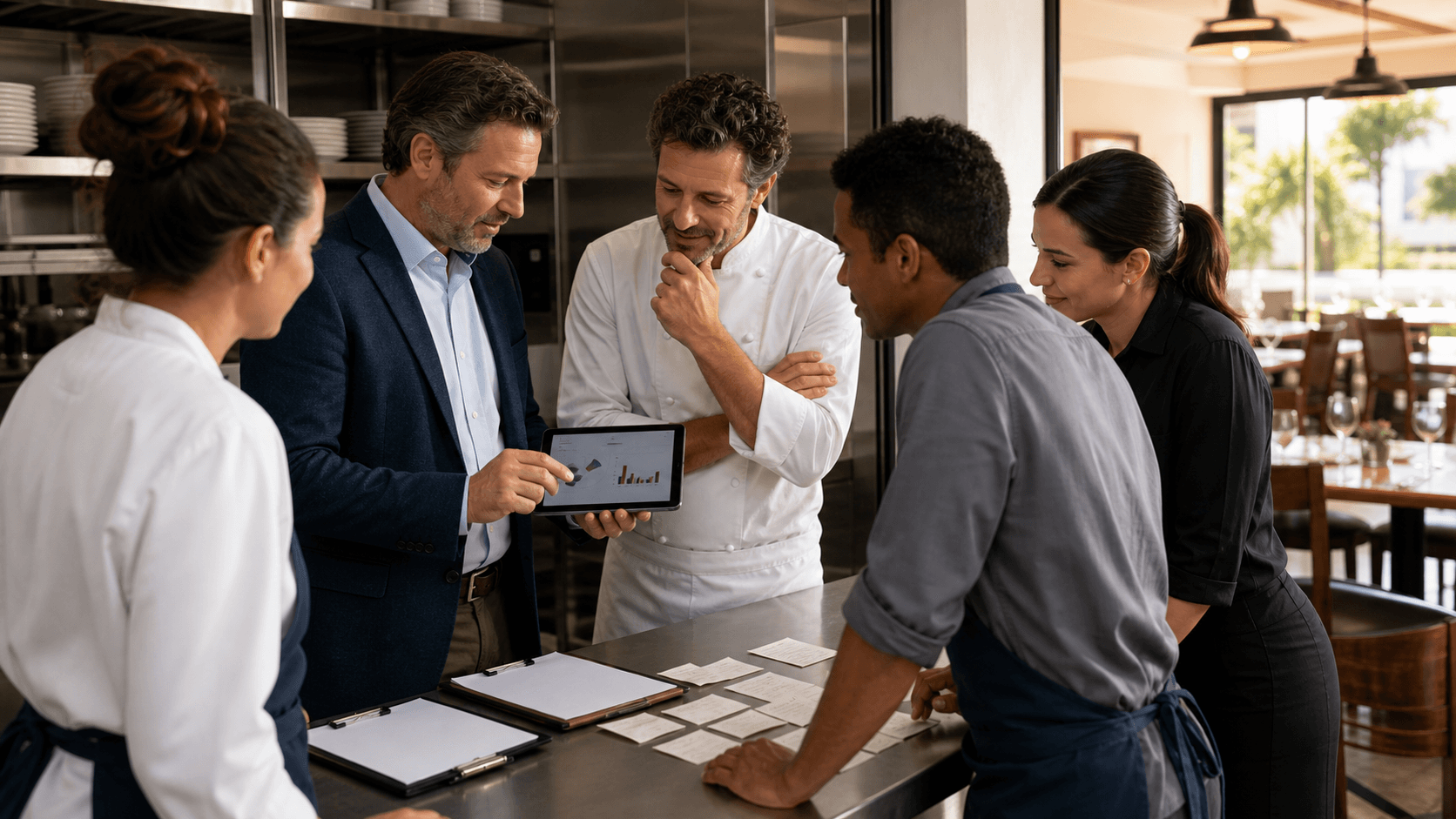
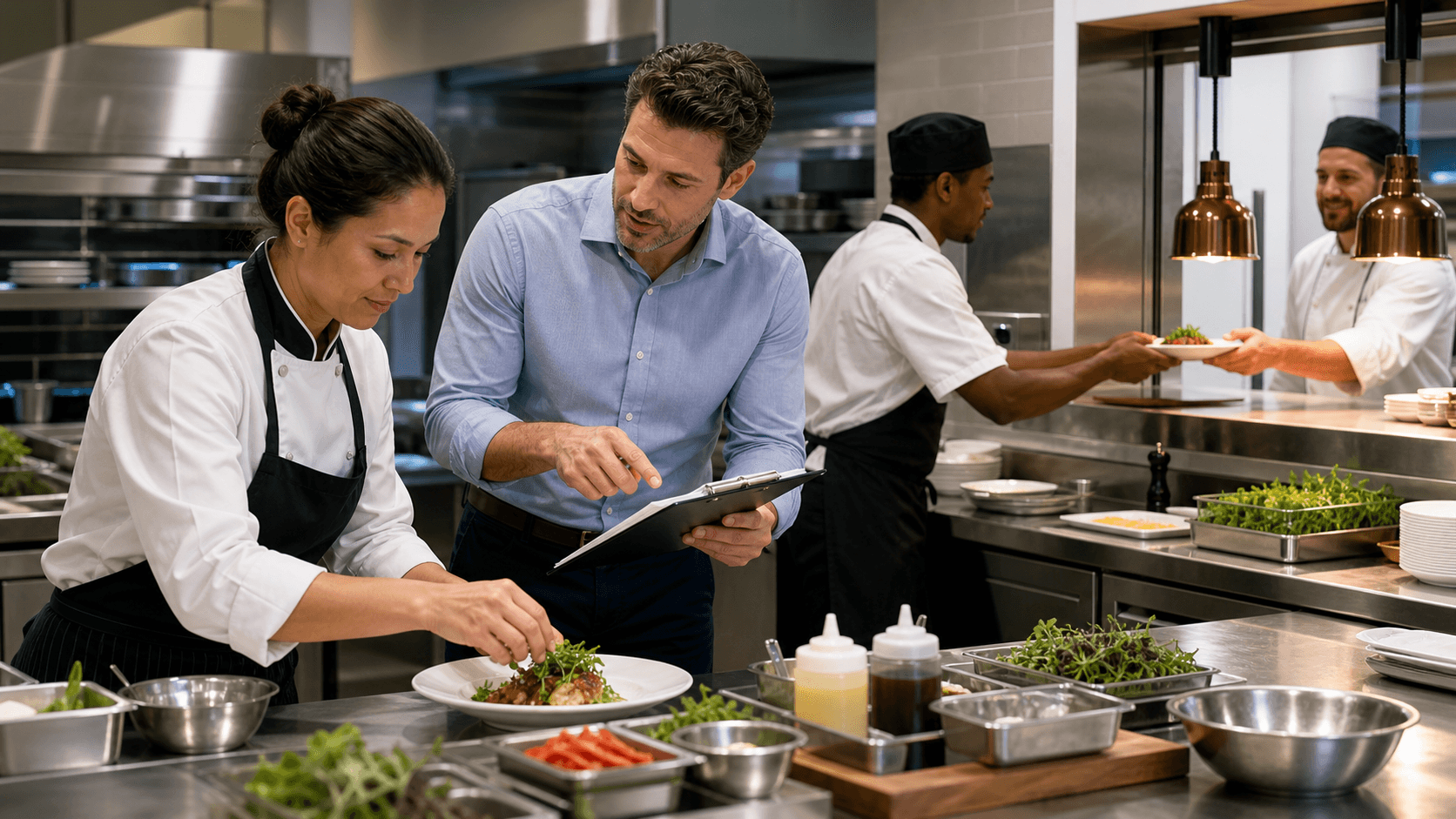
They are built on the floor, with your team, in real prep and real service. Not just in a meeting room with sticky notes. We watch where the line clogs, where servers get stuck, where tickets go to die. Then we write the system to fix those pain points directly.
They also live in one simple source of truth. That might be a slim binder, a digital hub, or a mix, as long as:
- Your newest hire can read it and do their job
- Your veterans respect it because it matches how the room actually runs
- It is easy to update when you change the menu, layout, or hours
The last piece is metrics baked right into the SOP. Things like:
- Target ticket times by menu section
- Prep yields and batch sizes that match real sales
- Labour ratios by daypart, not just per week
Now the system is not just "follow the steps." It is "hit these targets, and here is how."
When this is done well, owners finally get to leave before close, take a weekend away, or plan a second location without fear that the first one will collapse. The restaurant runs on clear, shared rules instead of one exhausted person holding everything in their head.
If You Are Done Babysitting Your Own Business, Let's Talk
If you are walking into the rest of the busy season already tired, and your current "systems" are mostly tribal knowledge plus a dusty binder, you are not alone. Plenty of independent operators in places like Victoria and across Canada are in the same spot.
Nathan Satanove has spent years in the same trenches, as a consultant and an operator, working the floor, the line, and the books. The work now is simple, not easy: look closely at how your service actually runs, then build restaurant SOP development services around that reality, not someone else's fantasy playbook. That is how you get your margins back, your time back, and a restaurant that can finally run without you glued to the pass.
Get Started With Your Project Today
If you are ready to tighten up your operations and give your team clear, consistent standards, our restaurant SOP development services are built to help. At Nathan Satanove, we work with you to translate how you want your restaurant to run into practical, easy-to-follow procedures. Reach out to contact us and we will walk you through the next steps and timeline for your project.