Stop Outsourcing Your Common Sense to SOP Consultants
Restaurant SOP development services always seem to get more attention when business slows down.
Patio season starts fading. Fall reservations look soft. Labour still feels heavy. The owner begins thinking, "If we just had better systems, everything would run properly."
Then the search for binders begins.
Systems matter. Written standards matter. Training matters. But there is a massive difference between documentation that tightens margins and generic playbooks created by people who have never closed a Friday double.
One helps the restaurant perform when the pressure is on.
The other collects dust and eats printer ink.
I am not against SOPs. I am against systems built in isolation from the actual operation.
I have spent more than 20 years on the floor, on the line, inside the office, and in the owner's chair. I know what it feels like to be pulled into every decision because the business depends too heavily on one or two people.
If you want more profit, fewer fires, stronger managers, and less time babysitting the operation, you cannot outsource your common sense to a consultant and expect a template to fix the business.
The systems have to be built from the floor up.
The Problem with Bought-and-Pasted Restaurant SOPs
Most packaged restaurant SOP development services are designed around predictability.
Your restaurant is not predictable.
These programs often assume:
- Stable staffing
- Reliable equipment
- Consistent sales patterns
- Perfect deliveries
- Managers who follow through without supervision
- Prep cooks who never call in sick
That is not how independent restaurants operate.
Your building may be awkward. Your walk-in may be too small. Your equipment may work perfectly until the middle of service. Your staffing pool may change every six months. Your Tuesday sales may suddenly look like a Saturday because a tournament came to town.
Generic SOPs fail because they ignore realities such as:
- Tight margins and short cash cycles
- Old buildings and half-working equipment
- Labour shortages and constant turnover
- Sales spikes that do not follow the forecast
- Rushes where the printer dies, the fridge is sweating, and the room keeps filling anyway
There are a few red flags that immediately tell me you are buying an agency package instead of operator work:
- You receive a huge PDF or a polished online manual
- There are diagrams, org charts, and flowcharts, but nobody has timed your ticket flow
- Nobody has worked a full shift beside your team
- Nobody has spent time in your dish pit, prep area, host stand, or pass
- The recommendations do not reflect your menu, layout, equipment, labour mix, or sales volume
The cost is not just the invoice.
The larger cost is the time, energy, and credibility you lose trying to implement systems the team knows do not fit.
When cooks, servers, and managers feel that a process was built by someone who does not understand the operation, they usually do the same thing.
They agree during the meeting.
Then they return to the habits that actually get them through service.
That creates fake compliance.
The checklist gets signed. The box gets checked. The consultant gets paid.
Nothing materially changes.
There is no improvement in profit. There is no stronger guest experience. There is no reduction in owner dependency.
There is just more paperwork.
What Real Restaurant SOP Development Should Look Like
Systems that work in independent restaurants start where the work happens.
That means someone needs to be in the building when the operation is under real pressure.
Real SOP development looks like:
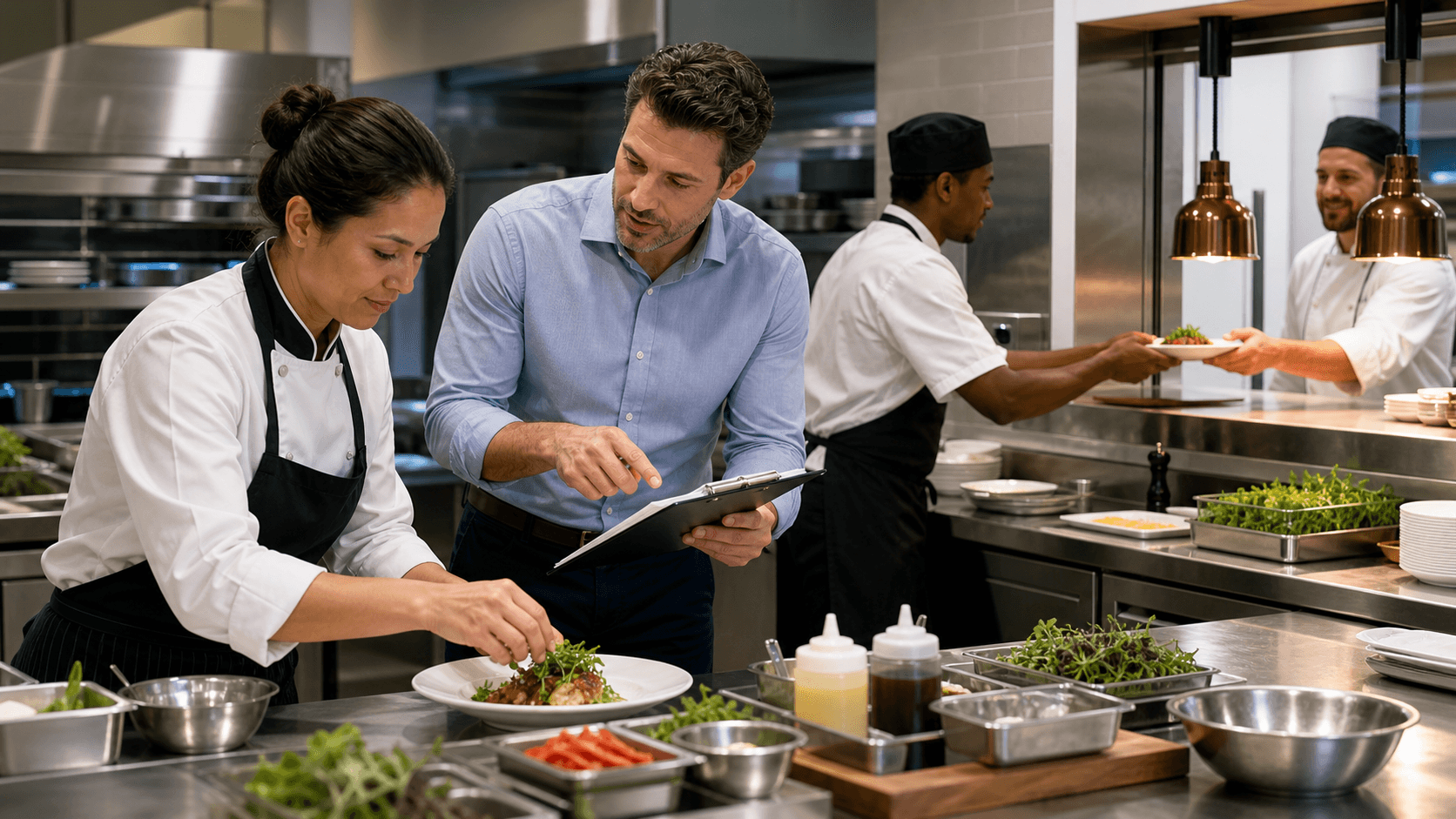
- Walking the floor during live service
- Timing tickets from order entry to the guest receiving the plate
- Watching what happens when the pass gets congested
- Standing beside dish when the racks start stacking up
- Observing the host when the wait list builds and tables are not turning
- Following prep from delivery through storage, production, and service
- Watching how managers respond when the plan breaks
You learn far more from one busy shift than you do from five Zoom calls.
From there, the SOPs should be built around the restaurant's actual constraints:
- The menu and prep load
- The equipment, including the equipment that causes problems
- The staffing reality
- The building and floor plan
- Local liquor and health regulations
- Sales patterns by day and season
- The owner's bandwidth
- The management team's current skill level
The goal is one clear source of truth.
Not five binders.
Not six different Google Docs.
Not one process in the manual and a completely different process on the floor.
The standards need to live where the team already works:
- Notes and procedures inside the POS or KDS
- Prep lists that reflect the day of the week
- Pars that change with volume and seasonality
- Station guides located at the station
- Shift checklists with clear times and clear owners
- Manager routines that are simple enough to verify
Then the systems need to be supported by training loops the restaurant can maintain.
Not training built for the perfect week when every employee arrives early, rested, and eager to learn.
Training that works on a Wednesday when someone called in, the delivery arrived late, and the manager is already covering a station.
If the training process cannot survive that environment, it will not last.
Systems That Actually Move Margin, Not Just Look Pretty
Every SOP should connect to an outcome.
If a process does not improve a number, strengthen accountability, reduce risk, or improve the guest experience, it may just be administration dressed up as operations.
Important numbers to connect your systems to include:
- Labour percentage
- Plate cost
- Waste
- Ticket times
- Table turns
- Average cheque
- Upsell rate on priority items
- Voids and comps
- Inventory variance
- Overtime
- Guest complaints
The highest-impact systems are rarely flashy.
They are the boring, repeatable processes that shift margin over time:
- Ordering controls that stop unnecessary product from entering the building
- Waste logs that lead to actual conversations and changes
- Prep scaling by daypart, season, and sales volume
- Portion standards that still work in a rush
- Seating and pacing rules that stop the host from crushing one section
- Service scripting that improves cheque average without making staff sound robotic
- Bar batching and garnish standards that keep the rail moving
- Closing systems that do not depend on one heroic employee
- Manager checks that catch problems before the owner has to
Late summer and early fall can be good windows to tighten systems.
Sales often soften enough to let you test changes without using the holiday season as a laboratory.
Use slower periods to:
- Adjust station layouts
- Test new prep levels
- Time service flows
- Rebuild checklists
- Train managers
- Remove unnecessary steps
- Confirm that the system works before volume returns
When the restaurant gets busy again, the standards should already be part of the operation.
Holiday season is not the time to introduce a brand-new 40-page manual and hope everyone follows it.
The Difference Between an Operator and a "Restaurant Coach"
There is a clear difference between someone who has studied restaurants and someone who has operated one.
Experience changes the questions you ask.
An operator thinks about:
- How the change will show up in pre-shift
- Whether the team can execute it when the room is full
- What happens when a key employee calls in sick
- Whether the slowest person on the team can still follow the system
- How the process affects ticket times, labour, and guest flow
- Who will verify that it happened
- What happens when the equipment fails
A typical coach may think more about:
- Frameworks
- Vision statements
- Values exercises
- Generic 12-week programs
- Templates built to work across multiple industries
Those things may have value, but they do not replace implementation.
Real owner outcomes come from the difficult work after the document is written.
That often means making hard decisions:
- Changing people who cannot or will not follow the standard
- Changing operating hours that exist more from pride than profit
- Changing menu items that crush the line and do not make money
- Changing manager responsibilities
- Changing years-old habits that no longer serve the business
Systems exist so the restaurant can perform consistently without the owner standing in the middle of every shift.
But that only happens when the systems reflect how the restaurant actually operates.
Not how a slide deck says it should operate.
How to Vet Anyone Selling You SOPs
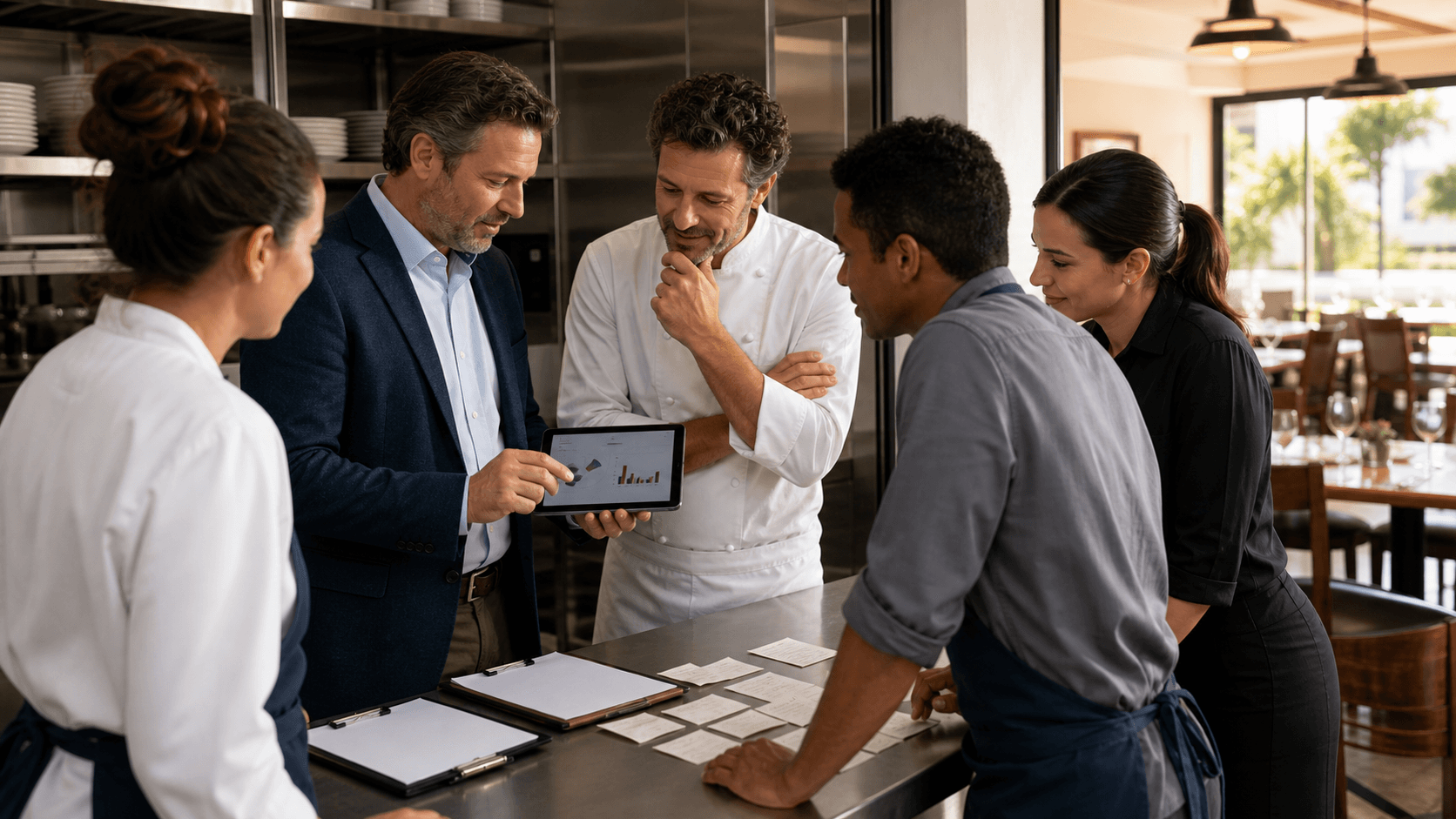
Before giving someone your money and a season of your time, ask direct questions.
Anyone selling restaurant SOP development services should be prepared to answer them.
Start with:
- Where have you actually worked, and in what roles?
- When was the last time you opened or closed a restaurant shift?
- Have you owned or managed a restaurant P&L?
- Can you show me a real before-and-after involving labour, food cost, waste, or ticket times?
- Will you spend time in the restaurant during live service?
- Who will train the team after the SOPs are written?
- How will you confirm the systems are being followed?
Listen carefully to how they respond.
A real operator usually explains the sequence.
They talk about reviewing numbers, observing service, identifying bottlenecks, testing changes, training the team, and measuring whether the new process worked.
Someone selling a package will usually return to deliverables.
Documents.
Calls.
Templates.
Access to a portal.
A real discovery process may feel slightly uncomfortable.
It should be:
- Blunt and curious
- Focused on your numbers
- Detailed about the floor plan and menu
- Interested in staffing patterns and manager capability
- Willing to question how things are currently done
- Honest about what will and will not work
Look for non-negotiables in the proposal:
- A clear scope
- Specific outcomes
- Time inside the restaurant
- Training and implementation
- Follow-up and accountability
- A schedule that reflects seasonality and staff capacity
- Defined responsibilities for the owner, managers, and consultant
Be careful when the offer consists mostly of documents, meetings, and a playbook.
If there is no plan to observe the restaurant when it is busy, there is a good chance you are buying theory.
What to Do Next
If you are reviewing your numbers and thinking the restaurant needs stronger systems, do not begin with a template.
Begin with the floor.
Look at where the operation breaks.
Where do tickets stall?
Where does waste happen?
Which tasks depend on one person?
Where are managers unclear?
What does the owner keep stepping in to fix?
Those answers tell you which systems need to be built first.
After more than 20 years in this industry, this is the work I now do with independent restaurant owners.
I bring a second set of trained operator eyes into the business.
I review the numbers, walk the operation, observe the shifts, and help build only the systems that will improve performance.
Not every restaurant needs a consultant.
Sometimes the owner already knows what needs to be done and simply needs to stop avoiding it.
Sometimes there is a real operational gap that requires outside support.
If you are curious which situation applies to your restaurant, book a discovery call.
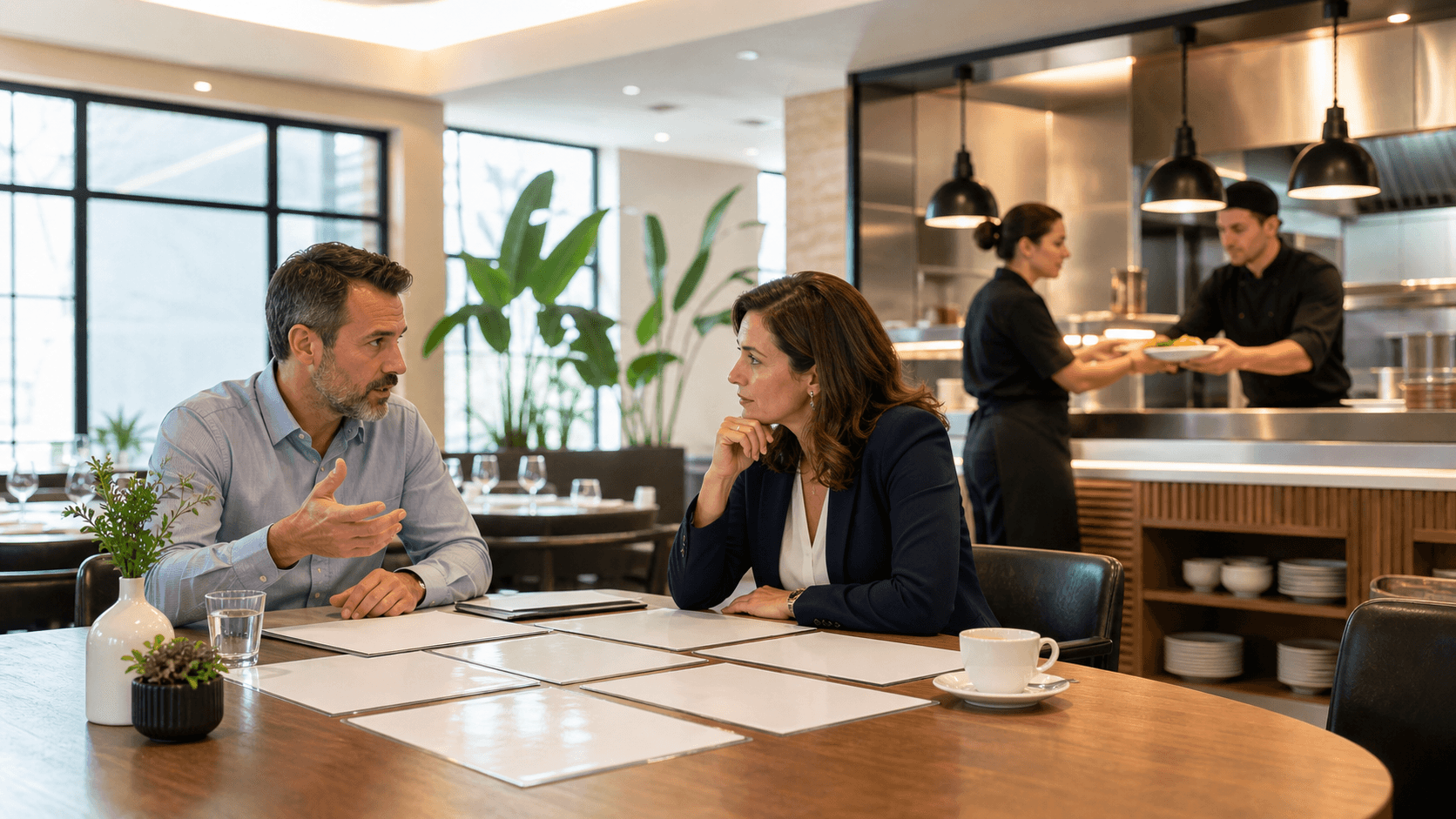
We will review your numbers, building, menu, people, and seasonality.
I will tell you directly where I believe the operation is leaking, whether outside support would move the dial, or whether you are better off handling it internally.
No fluff.
No playbook dump.
Just an honest conversation about what it will take to make the restaurant run the way it should.
Get Started With Your Project Today
If you are ready to create clearer, more consistent systems for your team, my restaurant SOP development services are built around the way your restaurant actually operates.
I work with owners and leadership teams to identify the processes that matter most, document them clearly, train the people responsible, and connect each system to a real operational outcome.
That may include:
- Opening and closing procedures
- Prep and par systems
- Ordering and inventory controls
- Food safety routines
- Line checks
- Service standards
- Manager responsibilities
- Training guides
- Shift communication
- Labour and scheduling routines
The goal is not to give you the largest manual possible.
The goal is to create practical systems your team can use, your managers can enforce, and your business can measure.
Tell me what is happening inside your restaurant, where the operation keeps breaking, and what you want to improve.
Then we can determine the right approach and whether my support is the right fit.