Inside Restaurant Staff Training Consultants Owners Actually Use
Strong staff training is one of the few levers you control that can protect your margins, even when everything else feels broken. When labour is tight, food costs are high, and guests are picky, you cannot afford servers who are guessing their way through a Saturday night.
As we roll out of summer into September, patios start closing, kids go back to school, and we head toward Q4. You know what is coming: holiday parties, dark at 4:30, big groups, stressed guests, and a team that might already be tired. This is exactly when weak training quietly bleeds money. In this article, I am going to look at what a real restaurant staff training consultant actually does on your floor, how that connects to labour and profit, and how to tell if the person you are thinking of bringing in has ever actually survived a slammed service in their life.
I am speaking as an operator who has opened, run, and rescued independent spots, not as someone who only writes slide decks. Owners do not need more theory. You need your people to seat, sell, serve, and close like pros, every shift, so you can get your life back.
Why Generic Training Fails in Real Restaurants
Most restaurant staff training consultants sell the same thing: one-day workshops, pretty binders, and long PDFs your team will never read. On paper, it looks good. In real service, nothing changes.
You probably know this pattern:
- Someone runs a seminar before opening
- Staff nod along, get a script, maybe a laminated sheet
- By Friday dinner, that script is gone and everyone is back to survival mode
Generic training is built for big systems, not a 60-seat room with a small kitchen and a short roster. Corporate-style content loves brand lines and rigid steps. Independent restaurants in places like Victoria or Vancouver Island need flexible moves that still work when:
- The dishwasher calls in sick at 4:30
- Half the reservations show up late
- The fryer dies right before the rush
- You get double sat on three sections at once
That is where the money leaks. Staff might be "trained" but:
- No one is actually driving add-ons, second drinks, or desserts
- Tables sit too long before first touch, so turns crawl
- Tickets do not pace well from kitchen to floor
- When something goes wrong, there is no clear recovery play, so comps blow up
Then the owner pain kicks in. You are back on the floor, running food, expediting, stepping into every guest issue, because the team has no lived standard. Just a binder on a shelf.
What a Real Restaurant Staff Training Consultant Actually Does
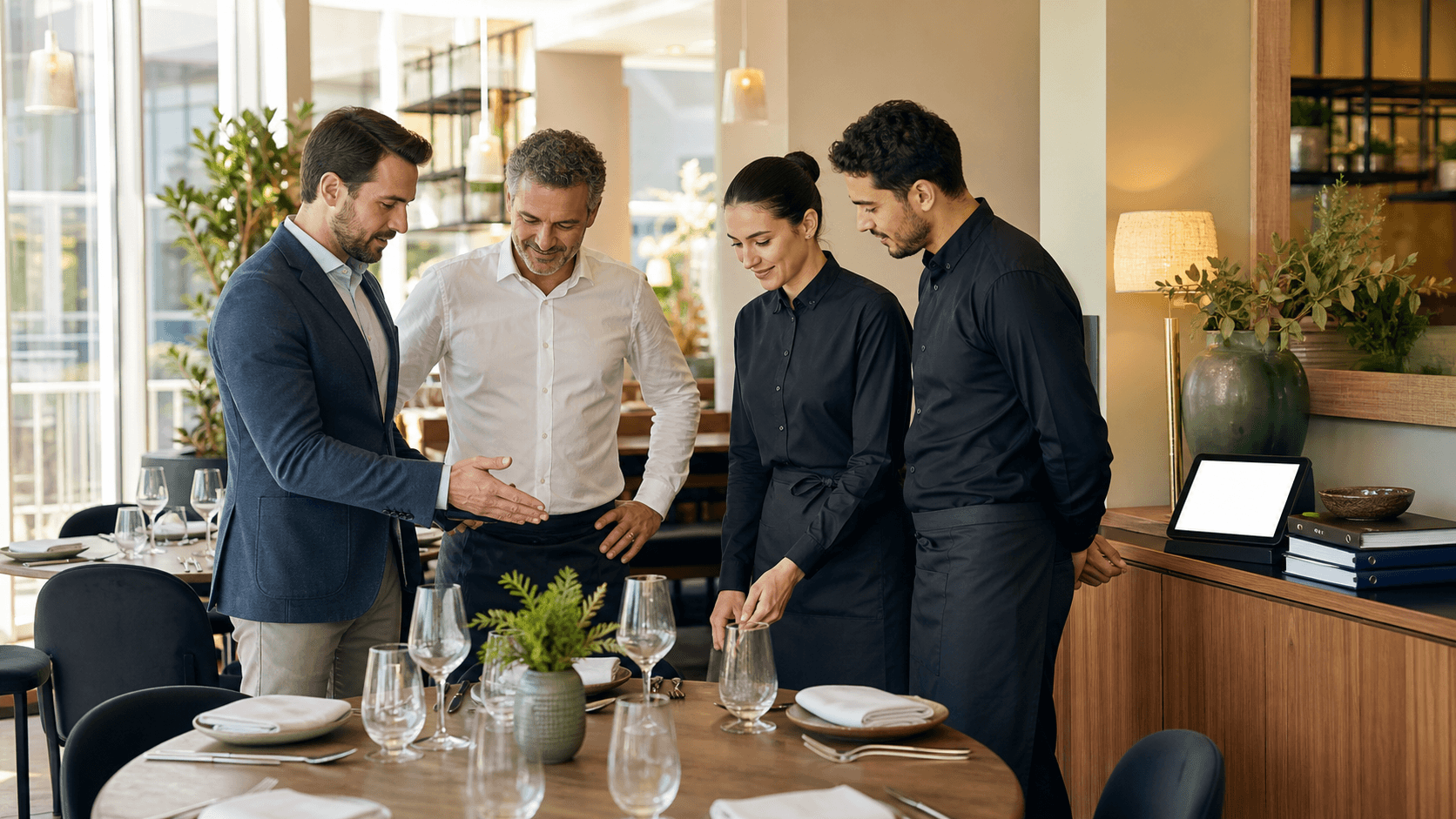
A real restaurant staff training consultant does not guess from a Zoom call. They show up. They walk your floor. They feel your room in real time.
On-site, I watch a full service and pay attention to little things that drive your numbers:
- How long it takes to greet and seat
- Server language at the table, especially on drinks and apps
- Ticket times and where plates get stuck
- How staff handle a problem without you jumping in
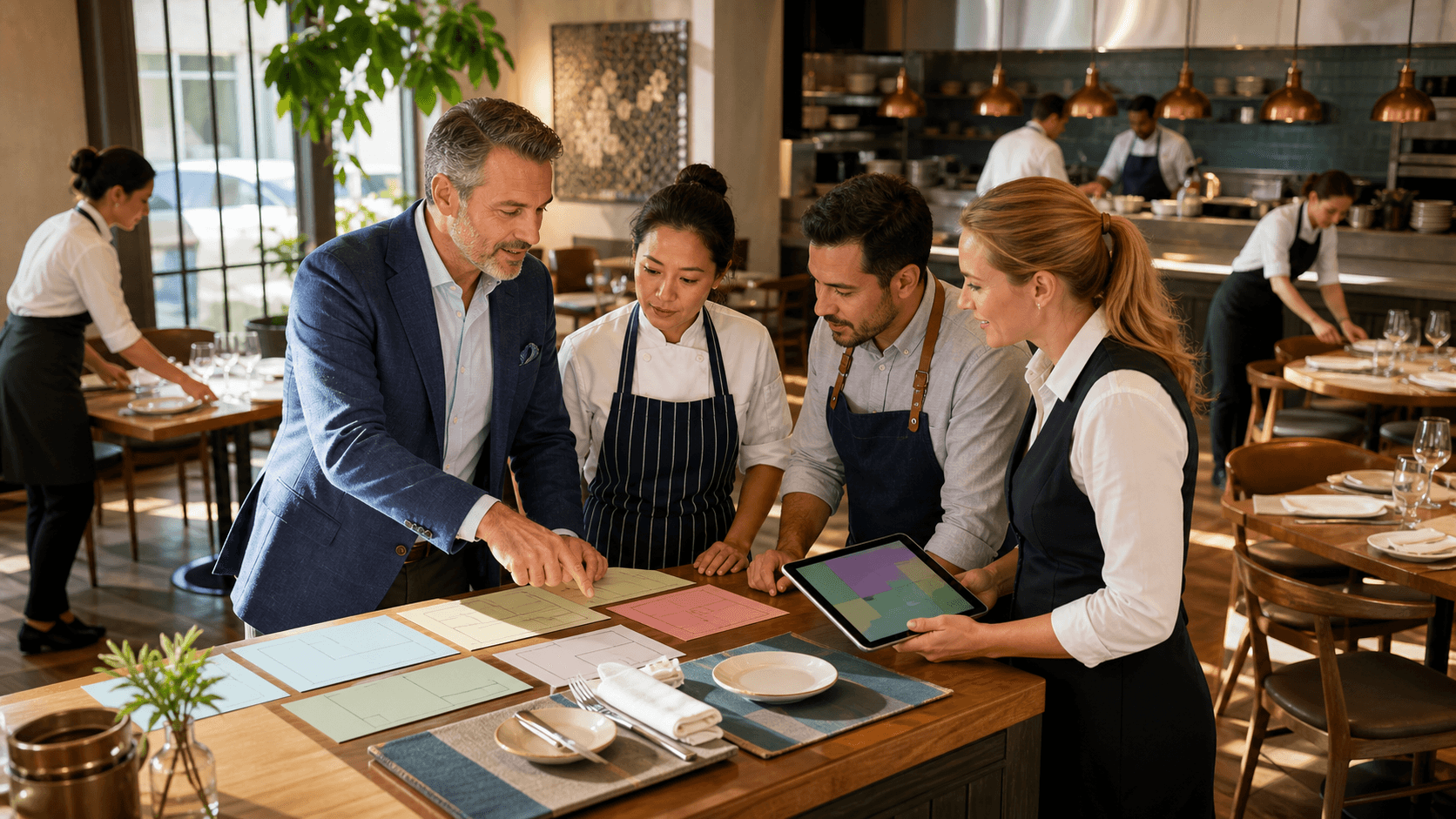
Then I build systems around your actual layout, menu, and team. No fake ideal restaurant. Just your space.
That often means tightening:
- Pre-shift routines, so every server hits the floor ready, not scrambling
- Section setup, side stations, and smallwares, so staff move less and serve more
- Service flow, like who owns which steps, in what order, during peaks
- Expo and pass habits, so food lands hot and complete
Yes, some things get written down, but paper is not the point. The real work is hands-on coaching on real shifts. That can look like:
- Running lineup, teaching what to cover in five minutes that actually moves numbers
- Shadowing servers and bartenders, then giving direct, in-the-moment feedback
- Drilling order taking, timing, and recovery moves until they are muscle memory
Every change is tied back to hard numbers:
- Labour percentage
- Average cheque
- Table turn time
- Comps and voids
If a standard does not protect or grow one of those, it is not worth your team's energy.
Turning Staff Training Into Profit, Not Payroll
Training is not school. It is an investment that should show up on your P&L.
I focus on the moments that matter most:
- How fast guests are greeted and seated
- First touch at the table and how drinks are suggested
- Order accuracy so the kitchen is not fixing mistakes all night
- Check drop timing so tables turn without guests feeling pushed
Small, clear habits make a big difference to cheque size, like:
- Walking guests toward profitable items with honest, confident language
- Pairing dishes with the right drinks that fit your concept
- Offering a second round at the right time, not as an afterthought at 10 minutes left
On the back end, better communication between FOH and BOH keeps nights smoother. When the line and the floor work from the same plan, you get:
- Fewer voids from wrong fires or mis-rings
- Better pacing so the kitchen is not crushed for an hour, then dead
- Tighter control on modifiers and add-ons in the POS
September and early fall are perfect for this. Shoulder nights are quieter. That is your window to drill new standards, test new flows, and iron out the bugs. By the time holiday season hits and the room is full of office parties and big groups, your team can run the system without training wheels.
How to Spot a Consultant Who Has Actually Run a Floor
You can tell pretty fast if a restaurant staff training consultant has lived a real service or just read about it.
Red flags:
- Lots of talk about frameworks and leadership language, no talk about ticket times
- Big on "culture", light on how to fix your host stand or pass
- No mention of how to handle a double-sat section or a 12-top and 6 walk-ins at the same time
Good questions to ask:
- What do you do when the walk-in dies at 6:30 on a busy night?
- How do you train staff to handle a missed fire without just giving the table away?
- What do you look for in pre-service lineup?
Listen for gritty details. They should talk about:
- How they cut labour without killing service
- How they bumped average cheque in a room like yours
- How they straightened out a broken seating chart, expo flow, or bar well
You also want someone your staff will respect. They need to look and sound like a person who can step in at the pass and help if things go off the rails, not someone who will just observe and "circle back" later with a report.
Nathan Satanove has been in the industry for over two decades, working everything from floor to ownership. That experience shapes how he works with independent operations, in the room, on the floor, fixing real bottlenecks instead of talking in theory.
Turn This Season Into a Reset, Not a Burnout Cycle
Every fall, owners hit the same fork in the road. Keep white-knuckling it with half-trained staff and hope this holiday season hurts a bit less than the last, or call time out and reset your systems now.
The better path is a team that knows what "good" looks like on a packed night, from host stand to pass. Clear standards. Consistent guest experience. Fewer fires. You at the wheel, not stuck expediting at the pass for six hours.
If a restaurant staff training consultant cannot talk clearly about your menu, your sections, your ticket times, and what they would do to improve them before year-end, they are not the person to trust with your team or your margins.
If you want another operator to walk your floor, watch a real service, and map out specific changes to protect your labour and grow cheque average before the holidays hit, set up a call. In 30, 45 minutes, we can usually spot the two or three training moves that will make the biggest difference in your room and decide if it makes sense to tackle them together this season.
Boost Your Restaurant's Performance With Expert Staff Training
If you are ready to improve service, increase guest satisfaction and streamline your operations, we are here to help. As a dedicated restaurant staff training consultant, Nathan Satanove works with you to design practical training that fits your concept and team. Reach out through our contact page to discuss your goals, and we will recommend a tailored path forward.