When You Need More Than Another Consultant
Restaurant margins are getting squeezed from every side. Food costs creep up, wages keep rising, delivery apps take a cut, and guest patterns shift with every season. You put in more hours, push your team harder, and still feel like you are working twice as much for half the reward.
I have been in this business for over 20 years. I have burned on the line, run the floor on Saturday doubles, and signed the cheques when there was not enough in the account. Most of what gets sold to independent owners as "help" would not survive a Friday night if you dropped it on the pass.
Generic consultants and agencies love templates and slide decks. That stuff looks nice in a meeting, but it does not help when the grill crashes at 7:30 on a Saturday, servers are in the weeds, and your food cost is still out of control. Theory does not fix a live service.
A fractional restaurant operator is different. This is an experienced operator who steps into your business part-time with owner-level responsibility. The goal is to fix numbers, people, and systems in the real world, not just give advice from a distance.
Right now, mid-summer in Canada, patios are packed, tourists are in town, and volume is exposing every crack in your operation. This is when problems stop being "things we should fix someday" and start burning real cash. Knowing when to bring in a fractional restaurant operator instead of another coach, marketing agency, or POS rep can be the difference between getting through the season or getting crushed by it.
The brutal signs your restaurant is running you
There is a point where the restaurant stops feeling like a business and starts feeling like a fire you are trying to keep from burning down the block. I have watched owners hit that point over and over, and the signs usually show up long before the bank account hits the wall.
You might recognise some of these:
- Daily firefighting feels normal
- You plug holes on the line, jump in to host, expedite, and work the bar
- Staff only perform when you are physically in the building
- Every sick call means you cancel your own plans
Money is just as stressful. Sales might look decent, but you do not trust your numbers. Food and labour costs feel like guesses. Month-end arrives and there is "no cash left," even though the room looked full all month. You start avoiding your P&L because you do not like what it will say.
Guest experience slips next. Some nights run smoothly, other nights are a mess. Ticket times swing all over the place. Reviews talk about "hit or miss" instead of "always solid." It is hard to build steady traffic when guests are never sure which version of your restaurant they are getting.
All this lands on you. Days off disappear. Sleep gets worse. You have no headspace for menu strategy, local marketing, or developing your team. You are just hanging on.
Here is the hard truth from someone who has been there: if everything collapses the moment you step away, you do not own a business. You own a job that owns you. That is usually the first real sign you need a fractional restaurant operator, not another staff meeting or new app.
When a fractional restaurant operator actually makes sense
A fractional operator is not for every situation. There are specific moments where bringing in that level of help actually makes sense.
It is a good fit when:
- Sales are flat year-over-year
- Reviews are decent but profit is weak
- You suspect problems with pricing, menu mix, or seating, but cannot see the fix
- You feel like you are leaving money on the table
I have walked into plenty of independents where the owner kept stacking tools instead of fixing systems. Reservation platform, inventory app, scheduling software, task boards. The tech pile gets bigger, but service still feels chaotic because nobody has designed clear flows, standards, and accountability around those tools. A fractional restaurant operator cares less about shiny tools and more about how the room actually runs on a busy night.
It also makes sense when you are planning change with real risk. Maybe you are adding a second location, rebranding, rewriting the menu, or shifting the concept. Those are big swings. If your back-of-house and front-of-house foundations are not stable, those moves can break you.
One example: I worked with an operator who was about to add a second location while the first was barely breaking even. Food cost was sitting around 36, 37%, labour was over 32%, and he was still talking about expansion. We spent three months tightening menu mix, retraining the line, and rebuilding schedules. Food dropped under 30%, labour settled around 28%, and only then did it make sense to talk seriously about the second site.
Most owners who hire a fractional restaurant operator want hands-on help, not theory. They are ready for someone who will be in the kitchen, on the floor, in the numbers, standing shoulder to shoulder with the team. This is not about having someone run your Friday dinner service forever. It is about stepping in with operator-level authority for a set period, fixing the core issues, then leaving you with a stable, profitable operation.
Fixing margins, systems, and marketing like a real operator
A real operator starts with margins, not motivation. The first step is clear, honest numbers. That usually means:
- Cleaning up the P&L so it actually reflects how you run
- Breaking food and labour down by daypart, not just by month
- Flagging waste, portion creep, comp and discount habits
- Spotting overtime patterns and unprofitable menu items
From there, the work moves into systems built around your actual service flow. Not some perfect textbook layout, but your space, your volume, your team. That often covers:
- Pars that match reality, not wishful thinking
- Prep lists that line cooks can follow without guessing
- Line setup and station responsibilities that reduce chaos
- Service standards tied to ticket times and table turns
Controls do not need to be fancy. They just need to be simple and enforceable. Daily cash checks. A clear invoice routine. Inventory that cannot be easily gamed. Labour schedules tied to sales patterns instead of gut feelings. Systems your team can still follow on the busiest Saturday in August when the patio is full and a storm rolls in over Vancouver or wherever you are operating.
Staff alignment is another big lever. A fractional restaurant operator helps your managers become true operators. That means reading numbers, coaching performance, and owning their departments so everything does not bottleneck at you.
On the marketing side, I take the same operator-first approach. Marketing only really works when operations can handle the volume. A practical playbook usually focuses on:
- Being easy to find on maps and search
- Driving repeat visits, not just first-timers
- Check average growth through simple upsell systems and pairing suggestions
- Promos your team can actually execute, without breaking the line
The key is connecting the dots between marketing, menu, seating, and staffing so every push lands as profit, not chaos. When we tightened those pieces for one neighbourhood spot, we did not chase followers; we focused on repeat local traffic and check average. Same headcount, same square footage, but an extra 8, 10% to the bottom line over a season.
How a fractional operator fits inside your restaurant
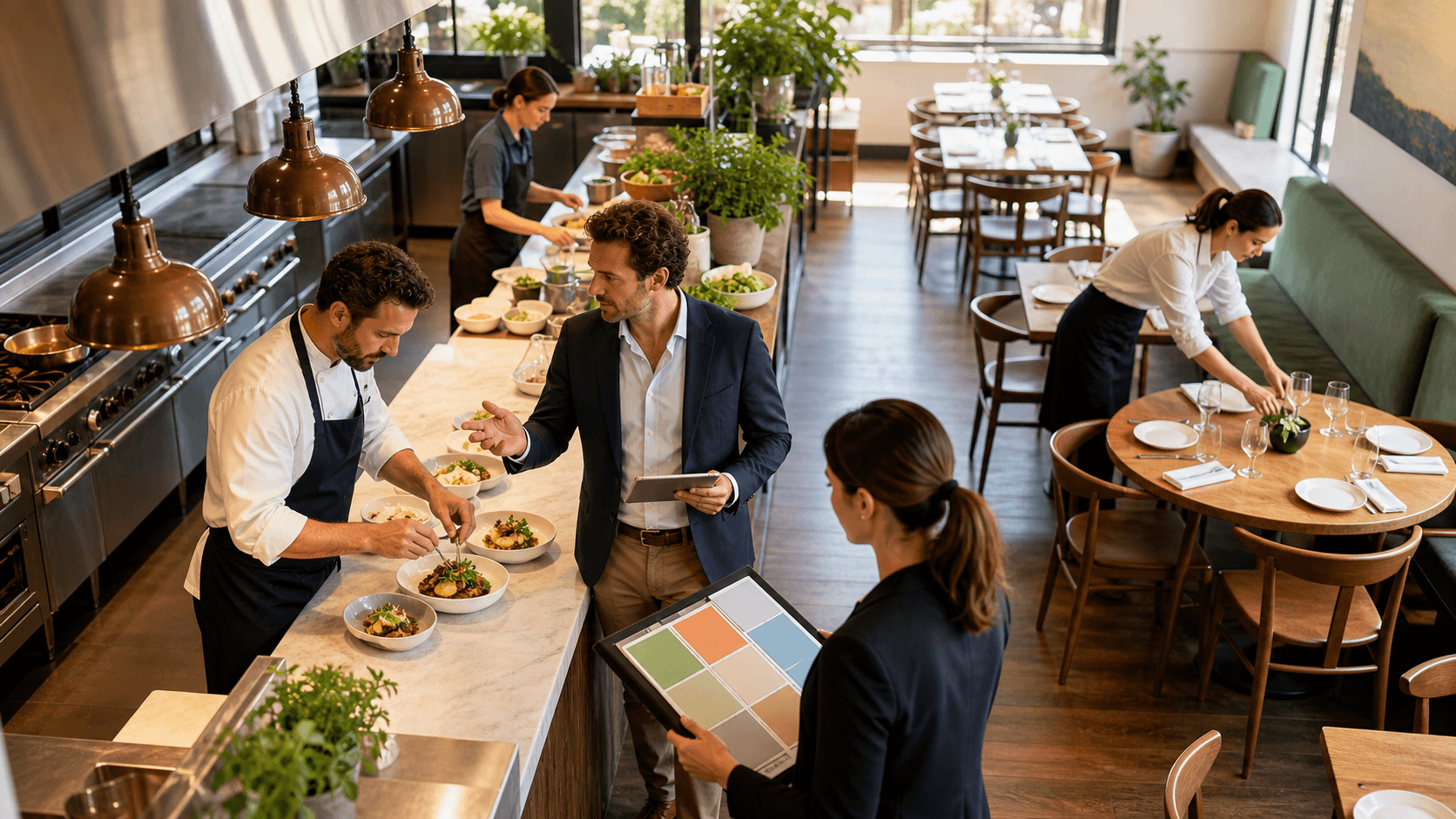
When a fractional restaurant operator steps into your world, the work starts on-site. They walk the floor, stand on the line, watch a live service, talk to staff and dig into historical numbers. No long surveys or vague "roadmaps" that sit in a folder.
From there, they build a short, sharp plan, usually focused on the next few months. It might target:
- Menu profitability and pricing
- Scheduling and labour standards
- Inventory routines and purchasing habits
- Training, pre-shifts, and guest experience standards
The operator is embedded, not external. They show up for key services, run pre-shifts with you, mentor your managers, and gut-check your numbers in real time. They help you make decisions before the damage is done, not just explain what went wrong after the month closes.
As systems start to hold and your managers take real ownership, the operator gradually steps back. Hours drop. The work shifts to check-ins and scorecards your team can run on their own. The goal is simple: a restaurant that runs profitably without destroying its owner, with or without a fractional restaurant operator in the building.
If you are reading this and recognise your own place in these examples, do not wait for "after the season" or "when things slow down." That day never really comes. If you want an operator in your corner instead of another consultant in your inbox, the next step is a straight, no-BS conversation about your numbers and your operation. Reach out for a discovery call and we will see, quickly, whether fractional support will actually move your margins or if you need a different plan.
Transform Your Restaurant's Operations With Expert Support
If your concept is ready to grow but you are not ready for a full-time executive hire, our fractional restaurant operator model gives you seasoned leadership with flexibility and control over costs. We work alongside your team to tighten systems, improve margins and create a smoother day-to-day operation. Tell us about your goals and challenges and we will design a practical plan tailored to your restaurant. If you are ready to talk through next steps, contact us today.