Breaking the Owner-Dependent Profit Ceiling
Break the Profit Ceiling in Your Owner-Run Restaurant
When the whole restaurant depends on you, profit has a ceiling.
A restaurant can look busy, have a loyal team, and still be quietly stuck.
If the business only works when you are in the building, there is a hard limit on how much it can make. Your profit becomes tied to your physical presence. Your margins depend on how many fires you personally put out. Your standards hold because you are there to catch every miss.
That is not a scalable restaurant.
That is an owner-dependent machine.
I have seen this play out in independent restaurants again and again. The room is full, the owner is exhausted, the staff is trying, and the P&L still does not reflect the work going in.
This is the profit ceiling problem. And it does not get solved by working harder.
It gets solved by building a business that can hold its standards without you standing on the pass every night.
Signs You Are the Bottleneck
The Signs Your Restaurant Is Too Dependent on You
Most owner dependency does not look broken from the outside. It looks like commitment.
You write the schedule.
You approve the comps.
You handle the VIPs.
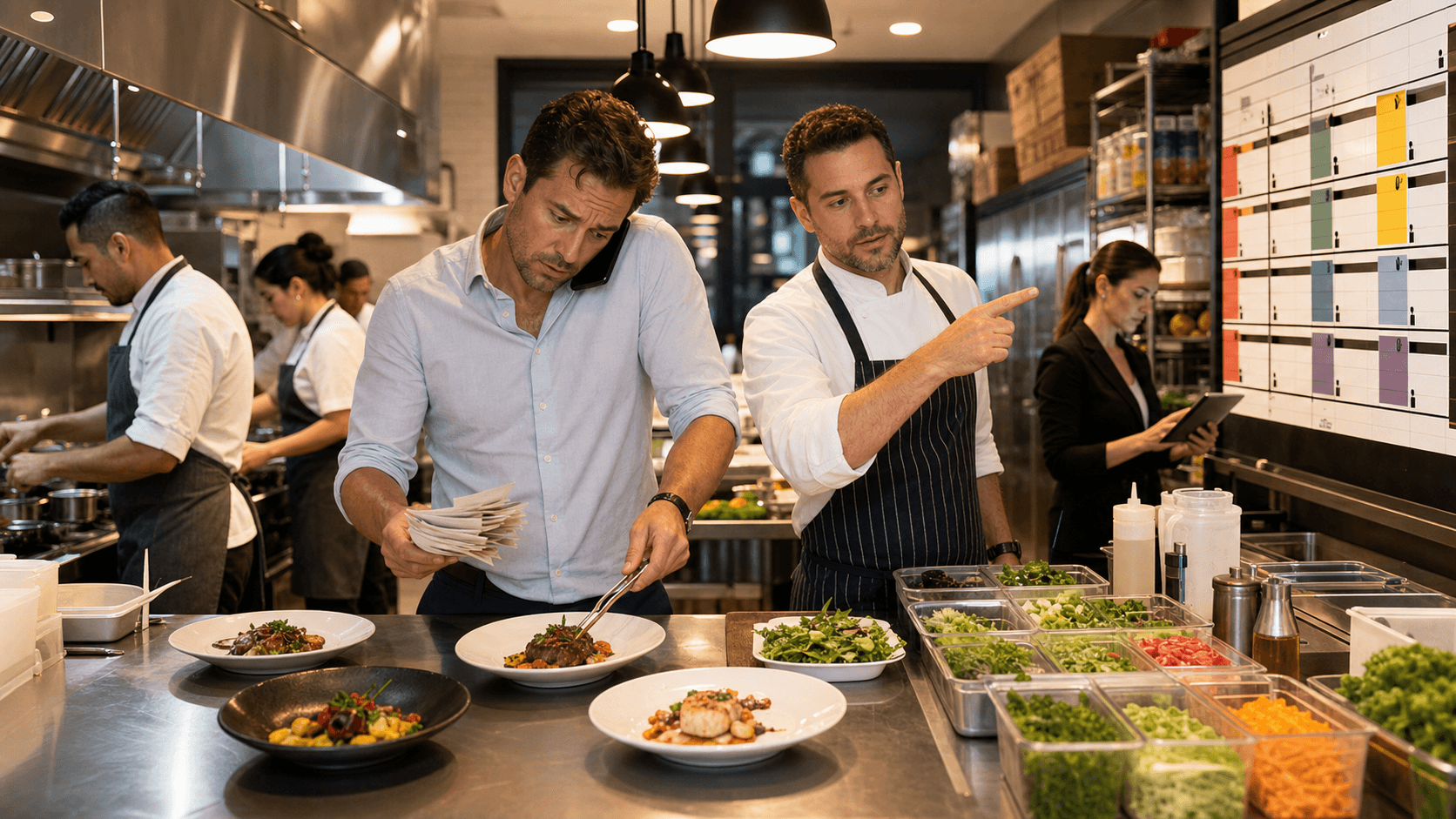
You jump on expo when the board fills up.
You place the orders.
You smooth over the complaints.
You catch the mistakes before they hit the table.
At first, that feels like control.
Over time, it becomes the reason the business cannot grow.
When every key decision runs through you, your team stops building the muscle to lead. Standards become memory instead of systems. The restaurant performs well only when you are there to force it into shape.
And the second you step away, things start to drift.
Labour runs loose.
Portions get inconsistent.
Waste creeps up.
Prep gets missed.
Discounts get sloppy.
Guests feel the difference.
That is the real cost of an owner-dependent restaurant. It does not just burn you out. It eats margin.
Why More Hustle Fails
Hustle Will Not Fix Thin Restaurant Margins
Restaurant owners already know how to work hard.
That is not the issue.
The problem is that more hours on the floor do not automatically create more profit. Every hour you spend covering a station, running food, or answering schedule texts is an hour you are not spending on the work that actually moves the net.
Menu engineering.
Labour planning.
Food cost controls.
Inventory routines.
Leadership development.
Guest recovery systems.
Marketing that actually supports the operation.
When you are trapped in service every day, the urgent work keeps stealing from the important work.
You might be driving revenue by being present, but you are not building the structure that protects profit when you are not there.
That is why so many independent restaurants feel busy and broke at the same time.
Building Standards Into Systems
The Standard Cannot Be "The Owner Will Catch It"
A restaurant cannot scale on instinct.
It needs standards that other people can see, understand, and execute.
That does not mean building a giant binder nobody opens. It means creating simple restaurant systems your team can actually use during a real shift.
The work usually starts in a few key places:
Inventory and ordering
Clear pars, tighter ordering routines, and fewer guesses.
Prep standards
Recipes and prep lists that get followed, checked, and adjusted.
Station setup
Every tool, product, and backup item has a place for a reason.
Labour planning
Schedules built around targets, not gut feel.
Shift execution
Pre-shift plans that tell leaders what winning looks like today.
Discount and comp controls
Clear rules so profit is not leaking through the POS.
None of this is glamorous. That is the point.
The money is usually hiding in boring, repeatable habits done consistently.
Marketing That Fits Real Service
Marketing Has to Work With the Operation, Not Against It
A lot of restaurant marketing is built like the kitchen does not exist.
Big promos. Complicated campaigns. Social ideas that look good online but crush the line on a busy night.
Independent restaurant marketing has to start with operational reality.
Can the kitchen execute it?
Does the team understand it?
Does it move profitable items?
Does it fill the right dayparts?
Does it improve net profit, or just create noise?
Good marketing should not need the owner babysitting every shift to make it work.
The best offers are simple, repeatable, and built from the margins backward. They respect food cost, labour, ticket times, prep capacity, and the actual rhythm of the room.
A promo that drives sales but wrecks the kitchen is not a win.
A special that sells ego dishes with weak margin is not a strategy.
Marketing should support the business you are trying to build, not add one more thing for you to personally manage.
What a System-Powered Restaurant Looks Like
What Changes When the Restaurant Becomes System-Powered
The goal is not to make the owner disappear.
The goal is to make the restaurant less fragile.
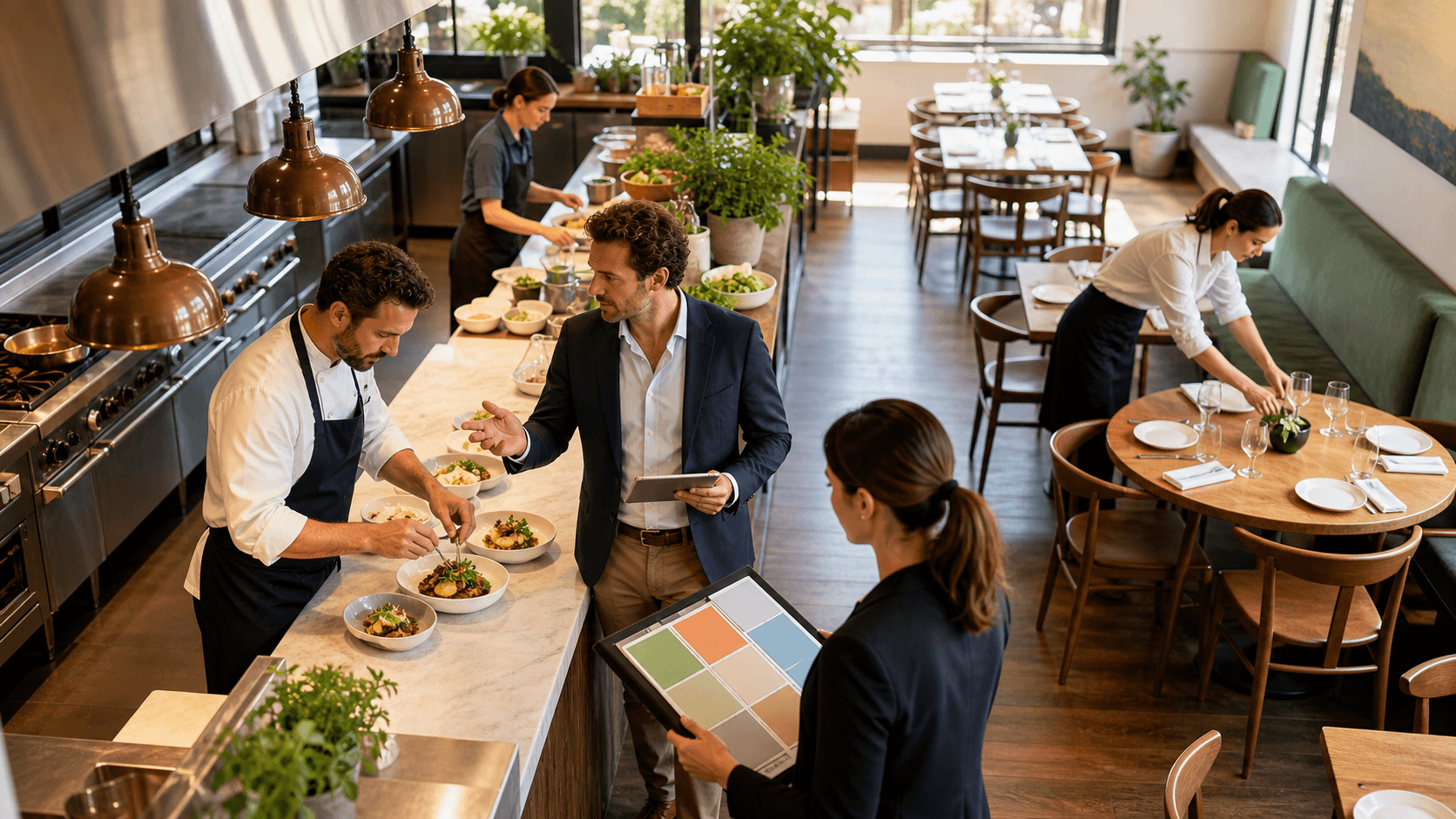
When the right systems are in place, the business starts to feel different.
Managers make cleaner decisions.
Cooks prep with more consistency.
Schedules are tied to targets.
Discounts are controlled.
Ordering gets calmer.
Waste becomes visible.
Guests get a more consistent experience.
The owner finally has room to think.
That is when the restaurant profit ceiling starts to lift.
Not because someone gave you a motivational speech.
Not because you bought another dashboard.
Not because you found some magic marketing trick.
Because the restaurant is no longer relying on your body to plug every leak.
Operator Help Versus Agency Tactics
Why Work With an Operator, Not Just an Agency
There is a big difference between someone who talks about restaurants and someone who has actually run one.
An agency might sell you a campaign.
An operator looks at whether your team can execute it on a slammed Saturday night.
An agency might talk about branding.
An operator asks what your labour target is, what your food cost is doing, and where the bottleneck shows up in service.
An agency might bring a slide deck.
An operator looks at prep lists, station flow, ticket times, menu mix, comps, waste, scheduling, and the actual habits driving your P&L.
That difference matters.
Because most independent restaurants do not need more theory.
They need practical, trench-level systems that protect margin, reduce owner dependency, and help the team run to standard without the owner carrying every shift.
Next Steps to Uncap Profit
Ready to Get Out From Under Your Own Restaurant?
If your restaurant only works when you are there, your profit is already capped.
The next step is not working more hours.
The next step is finding the weak points in the system and fixing them in the right order.
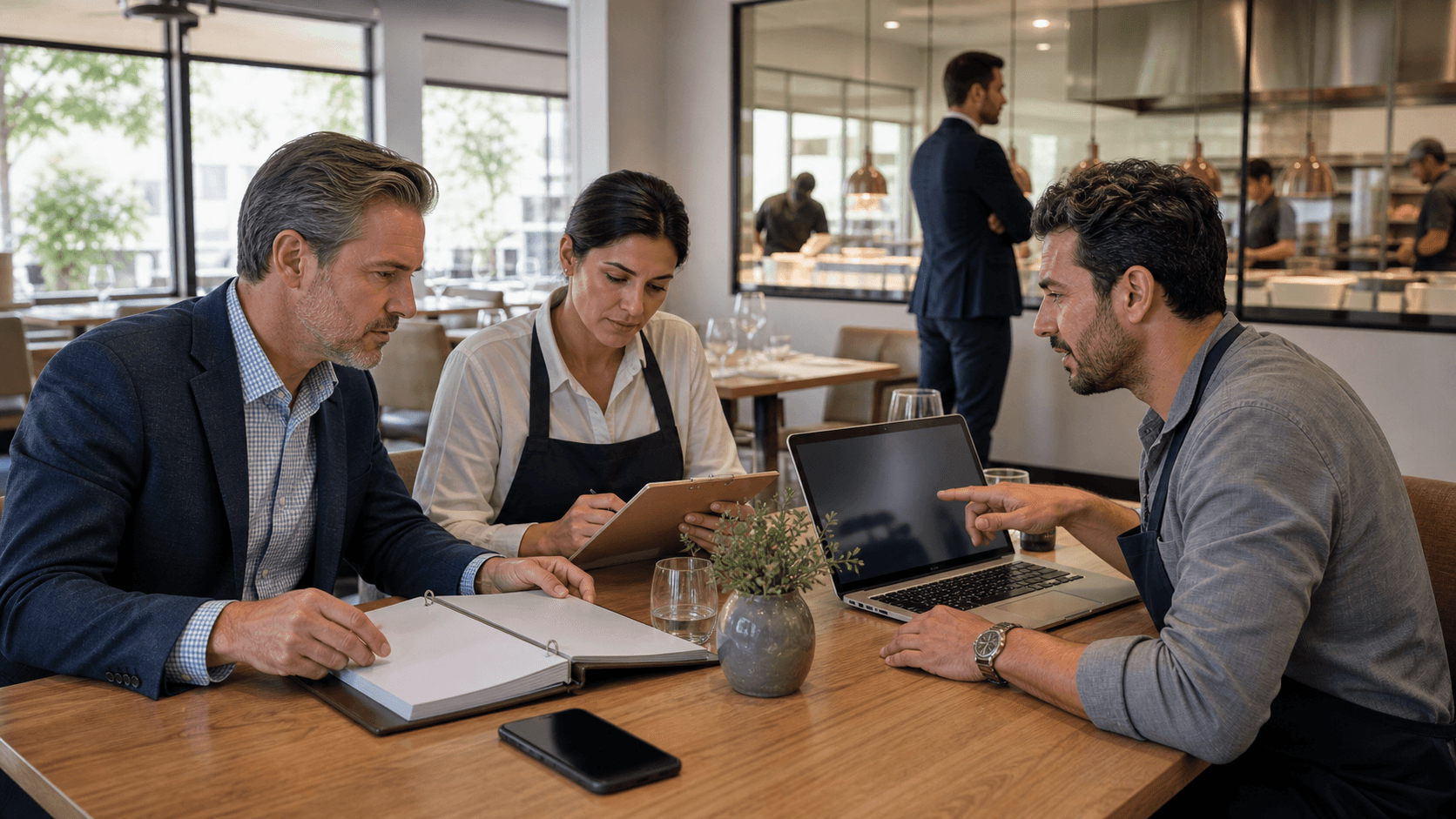
Bring your latest P&L, your schedule, your menu, and the pressure points you already know are costing you money. We will look at where owner dependency is showing up, where margin is leaking, and what needs to change first.
If you want a restaurant that can run to standard without you standing in it every night, let's talk.
Book a discovery call and let's start building the systems that move your profit, not just your sales.